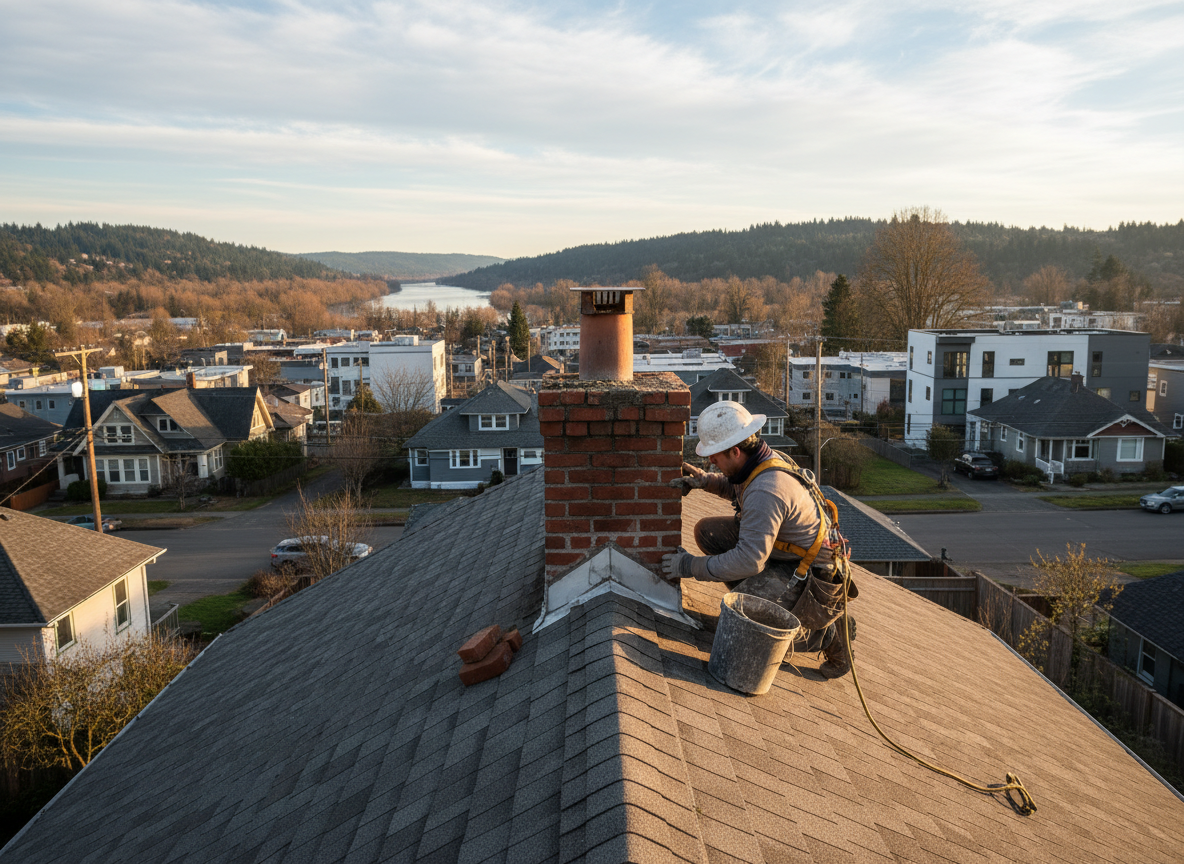
Roof chimney repair in Milwaukie often starts with water intrusion at the flashing where the chimney meets the roof. Mild wet winters keep roofs saturated for months, allowing even small gaps around clay or metal flashing to let water into attics and walls. Homes in Ardenwald and Hector Campbell built before 1960 frequently have original brick chimneys that settled unevenly on the clay-heavy soil, pulling flashing away from the roof deck. Technicians check for rot in the sheathing and counter-flashing before resealing, because simply adding caulk fails when the next storm hits.
In Downtown Milwaukie and Island Station, many roofs slope toward the Willamette River and collect debris that holds moisture against the chimney base. This leads to rusted step flashing and deteriorated mortar at the cricket. Repair work includes removing vegetation, replacing damaged flashing with copper or stainless steel that matches the existing roof material, and rebuilding the cricket if it no longer diverts water properly. Warm dry summers give a short window to complete exterior work before fall rains return, so crews schedule inspections early to avoid emergency calls once leaks appear inside.
Seasonal Timing for Roof Chimney Repair
Schedule roof chimney repair in late spring after the heaviest winter rains have passed but before summer heat makes asphalt shingles brittle. Waiting until fall increases the chance that undetected leaks have already damaged ceiling drywall in homes near Milwaukie Riverfront Park.
Common Materials and Edge Cases
Standard repairs use 26-gauge galvanized or copper step flashing tucked under existing shingles. On homes with cedar shake roofs common in Clackamas County, crews install a new lead apron at the chimney front because shake movement from temperature swings can reopen seams. Always verify the chimney crown is intact before closing the roof, as cracks there send water down the flue and mimic a roof leak.
Technician insight
In Milwaukie the thing that catches most people out with roof chimney repair is how the wet winters keep cedar and asphalt roofs damp for six months straight. Homeowners in Ardenwald often think a little roof tar will hold until next year, but the constant moisture pushes water behind the flashing and into the attic before anyone notices.
Ardenwald Leak After Heavy Rain
Water stains appeared on the ceiling of a 1950s home in Ardenwald after a series of storms. Inspection showed the original flashing had pulled away where the chimney had settled on the slope. We replaced the step flashing with copper, rebuilt the cricket, and sealed the joints. No further leaks occurred through the following winter.
How it works
- 1
Initial Inspection
Examine roof access points, flashing condition, and water stains from the attic in homes throughout Milwaukie.
- 2
Material Removal
Strip damaged flashing and any rotted sheathing around the chimney base while protecting surrounding shingles.
- 3
Flashing Replacement
Install new step and counter flashing matched to the roof pitch and material, then reseal the cricket.
- 4
Final Waterproofing
Apply appropriate sealant at all joints and test drainage before leaving the site.
Pricing
Upfront quotes after on-site inspection; price depends on roof access, chimney height, and extent of rotted decking.