2026-10-24 ·
Maintaining Chimneys in Milwaukie’s Older Neighborhoods
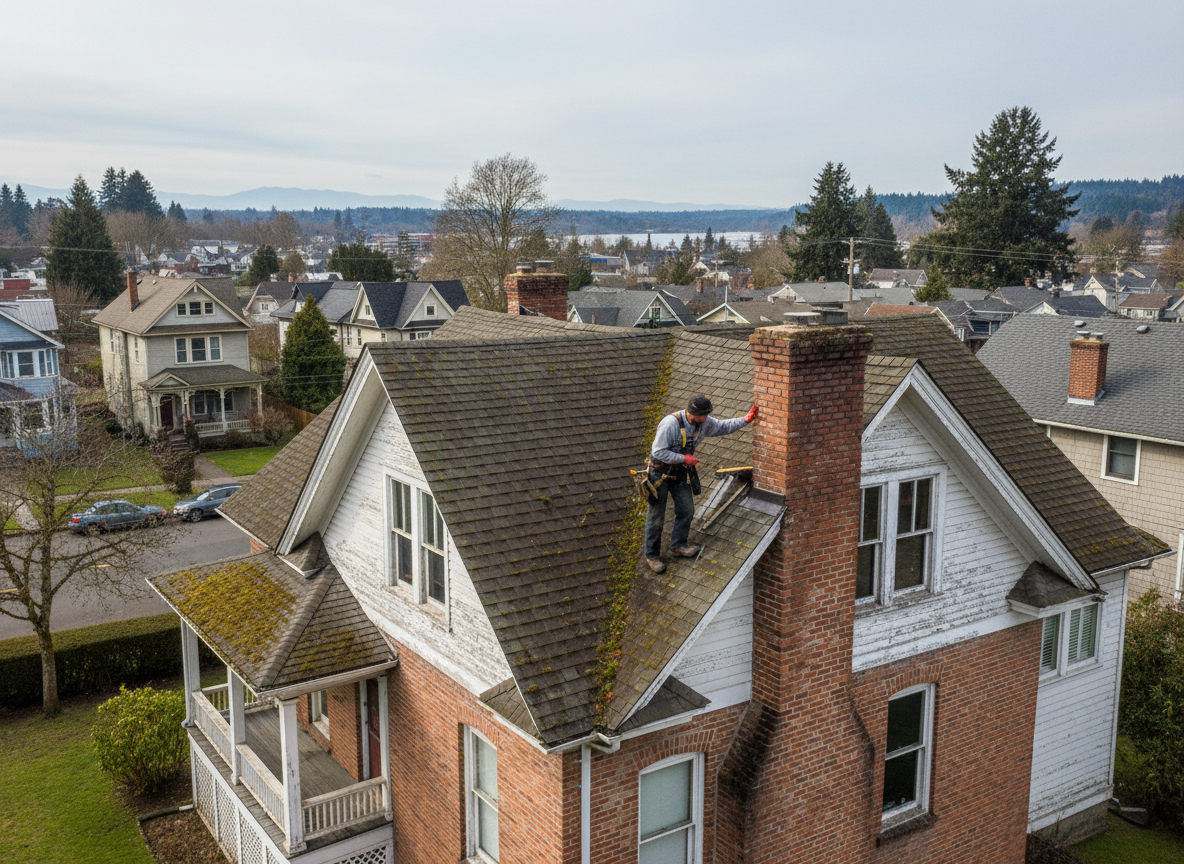
Chimneys in Milwaukie's older neighborhoods require inspections at least once per year to catch mortar erosion and flashing gaps before wet winters turn small issues into leaks or drafts. Homes built before 1950 in areas like Ardenwald, Island Station, and Hector Campbell commonly feature brick stacks tied into original roofs that have settled unevenly over decades. The county's mild wet winters deliver repeated freeze-thaw cycles and heavy rainfall that drive water behind crowns and through deteriorated joints, while warm dry summers provide the best window for tuckpointing and waterproofing work without trapping moisture.
Common Chimney Problems in Pre-1950 Homes
Brick chimneys in Downtown Milwaukie and Ardenwald often show spalling bricks and missing mortar within 8–12 years of the last repair because rainwater sits in horizontal joints during the long wet season. Island Station homes near the Willamette River experience extra humidity that speeds creosote softening and liner corrosion. Settled foundations in Hector Campbell shift flues out of plumb, creating stress cracks that allow smoke to enter attics. These conditions differ from newer Portland suburbs where metal inserts and modern flashing reduce the same risks. Regular visual checks from the ground and roof reveal early signs such as white efflorescence streaks or loose bricks before a full relining becomes necessary.
How Local Weather Patterns Affect Maintenance Timing
Mild wet winters in Clackamas County mean chimney maintenance must focus on water management rather than heavy creosote buildup common in colder regions. Rain from October through April repeatedly saturates crowns and flashing, so inspections should occur in late summer when surfaces are dry and repairs can cure properly. Warm dry summers allow crews to complete tuckpointing and crown work without the material washing out during sudden showers. Residents near Milwaukie Riverfront Park notice faster deterioration on chimneys facing prevailing winds that drive rain against the south and west faces. Scheduling chimney inspection service before the first fall rains prevents the leaks that appear once temperatures drop and heating systems run daily.
Practical Steps for Homeowners in Historic Areas
Start each season by examining the crown and cap from a safe distance for cracks or vegetation growth. Clear debris from the flue using a flashlight and mirror after burning season ends. Check interior walls around the fireplace for new water stains that indicate flashing failure. In older Ardenwald homes, test damper operation by closing it and holding a lit match nearby to confirm a proper seal. Document any changes with dated photos to track progression between visits. These checks complement professional chimney maintenance that includes video scanning of liners and mortar joints hidden from view.
When Professional Intervention Becomes Necessary
Call for service when white powder appears on interior bricks, smoke enters the room during use, or rainwater stains show on ceilings below the chimney. Homes in Historic Milwaukie often need chimney tuckpointing or crown repair once every 10–15 years due to the county's rainfall totals. Wind-driven debris from trees along the Willamette can also damage caps, making annual checks after storms worthwhile. See the related guide on protecting your chimney from Milwaukie wind and falling debris for additional seasonal steps that fit the local climate.
Closing Recommendations for Long-Term Care
Owners in Milwaukie's established neighborhoods protect their chimneys by combining homeowner observations with scheduled professional work timed to the dry season. Consistent attention to mortar, flashing, and crowns keeps older brick structures functional through repeated wet winters without requiring full rebuilds. SootLock Services remains available 24/7 at 10824 SE Oak St #105, Milwaukie, OR 97222 to handle urgent repairs when weather exposes hidden damage.