2026-10-24 ·
How Oregon Winter Rain Affects Chimney Flues in Milwaukie Homes
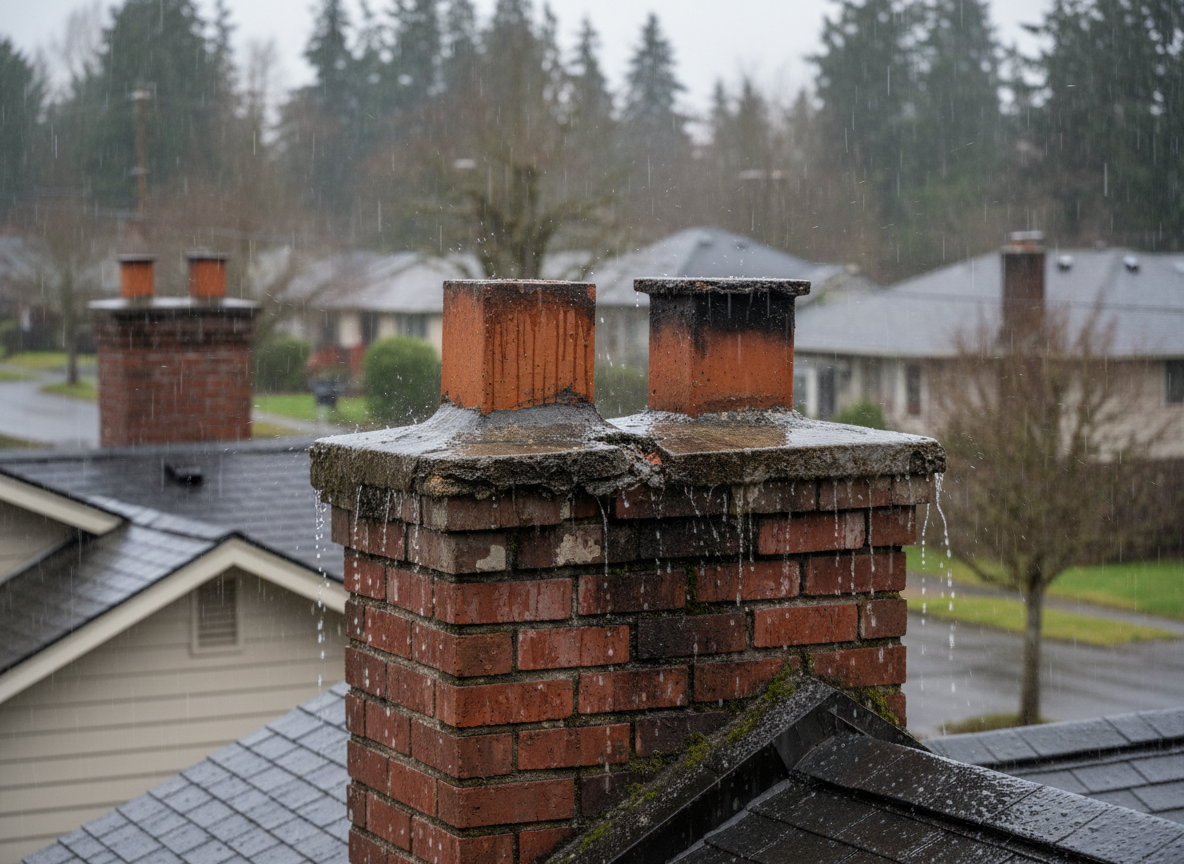
Oregon winter rain reaches Milwaukie flues through open tops and cracked crowns, pushing moisture down the liner where it mixes with combustion gases and forms acidic condensate that corrodes metal and masonry within a single season.
Rain Penetration Paths in Local Chimneys
Milwaukie receives steady winter rain that falls on exposed flue tiles and metal liners in homes across Downtown Milwaukie and Hector Campbell. Older brick chimneys common in Ardenwald neighborhoods absorb water at mortar joints, allowing it to travel downward and saturate the flue interior. The Willamette River humidity keeps surfaces damp longer, so even brief showers leave residual moisture that never fully dries before the next storm. This cycle repeats from November through March, unlike the warm dry summers that allow natural evaporation.
Water enters through missing chimney caps, deteriorated flashing, and hairline crown cracks typical on 1950s–1970s homes near Milwaukie Riverfront Park. Once inside, rain mixes with sulfur compounds from wood smoke to create sulfuric acid that etches clay tiles and pits stainless liners. Homeowners in Island Station often notice white efflorescence on interior walls after prolonged wet periods because moisture has migrated through the flue wall into living spaces.
Effects on Creosote and Corrosion
Persistent rain keeps flue temperatures lower, so smoke cools faster and deposits thicker, stickier creosote layers that trap additional moisture. In Clackamas County homes burning regular cordwood, this wet creosote hardens into a tar-like glaze that resists normal sweeping and increases chimney fire risk. Metal liners in prefabricated units serving Portland commuters’ houses corrode from the inside out, with pin-hole leaks appearing after five to eight winters of repeated wetting.
Masonry flues suffer spalling when freeze-thaw cycles follow heavy rain; water trapped in pores expands and flakes off tile surfaces. The result is rougher walls that collect even more creosote the following season. Residents in Historic Milwaukie notice draft problems and smoky fireplaces once the flue diameter shrinks from combined creosote and mineral buildup.
Inspection and Repair Timing
Schedule a chimney inspection service each October before the first heavy rains arrive. Technicians check crown condition, flashing seals, and liner integrity while the chimney is still dry. Early detection of moisture stains or white deposits on the smoke chamber prevents larger failures later in winter.
When leaks appear, targeted chimney leak repair restores the flue without full rebuilds. For homes showing widespread liner damage, chimney relining with a new stainless or cast-in-place liner stops ongoing corrosion. Chimney waterproofing applied to the exterior crown and flue top reduces future water entry while preserving breathability.
Protecting Flues Year-Round
Install a properly sized chimney cap with a rain excluder on every flue serving wood-burning appliances. Keep the cap screen clear of leaves and debris that collect during fall winds. In neighborhoods near the river, check the cap twice yearly because higher humidity encourages moss growth that can block draft.